






Dear Friends and Neighbors,
In my previous update, I mentioned I would be following up with more information on the transportation budget. I want to take a few minutes to do that, but first, I’d like to share a quick look at what I’ve been doing back home in the 15th District since the session wrapped up.
Read the full newsletter here.
Updates from the district
It’s been great to be back in the community, connecting with local leaders and organizations and seeing firsthand the work being done across our region.

I recently attended the opening of the Columbia Valley Center for Recovery, a project supported through funding I helped secure in the 2023–25 capital budget for the Benton-Franklin Recovery Coalition. This facility represents an important step forward in expanding access to recovery services in our area, and it was an honor to be there for such a meaningful milestone.
I also had the opportunity to attend the retirement celebration for Pasco Police Chief Ken Roske. Chief Roske has served our community with dedication and professionalism for many years, and his leadership has left a lasting impact on public safety in Pasco.
In addition, I joined the Tri-Cities Chamber of Commerce for their legislative wrap-up luncheon. It was a valuable opportunity to discuss the outcomes of the 2026 session and hear directly from local business and community leaders about the challenges and priorities they are seeing.
Transportation update
In my last update, I discussed my crash-prevention legislation, which creates targeted “crash prevention zones” so state and local agencies can focus on stretches of road with a pattern of serious or fatal collisions and take data-driven steps to improve safety. I also want to spend some time breaking down the transportation budget and what it means for our district going forward.
The 2026 supplemental transportation budget adds to the current two-year plan, bringing total spending to about $16.7 billion. A large share of that funding goes toward maintenance and preservation, and that’s where the priority should be. The roads and bridges we depend on every day don’t take care of themselves, and it’s important that we maintain what we have and finish projects already in progress before taking on new ones.
Projects in the 15th District
The transportation budget also includes several projects that directly benefit communities in the 15th Legislative District. These are practical investments focused on improving safety, supporting economic development, and keeping people and goods moving.
Additional funding continues to go toward the I-82 corridor, including improvements between Yakima and the Oregon border and upgrades to on- and off-ramps. These are critical routes for our region, supporting daily commutes, agriculture, freight, and regional commerce.
There are also targeted projects aimed at improving traffic flow and safety, such as roundabout improvements at key intersections and continued work on the regional beltway connector. Local projects, including improvements along East Nob Hill Boulevard and the 34th Avenue roundabouts, help address congestion and safety concerns at the community level.
In addition, funding is included for the East-West Corridor overpass and bridge project, which is an important long-term investment in mobility and connectivity for the Yakima area. Smaller investments, such as pedestrian and multimodal improvements near Pacific Northwest University of Health Sciences and transit expansions, such as the Terrace Heights extension, also help create a more balanced and accessible transportation system.
Taken together, these projects reflect a focus on maintaining and improving the infrastructure our communities rely on every day, while also planning for future growth.
What’s driving fuel costs in Washington
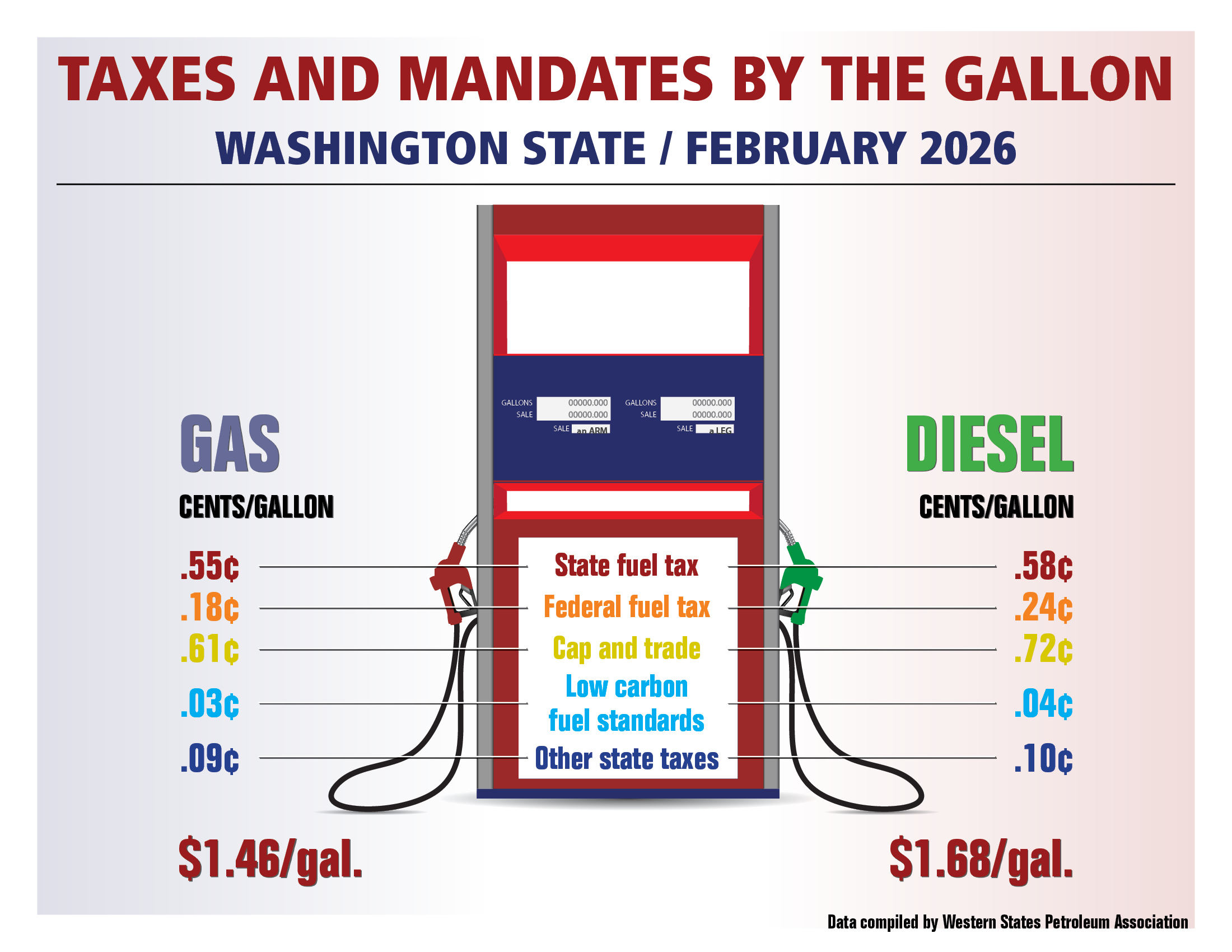 Across the district, I continue to hear the same question: why are fuel costs here among the highest in the country?
While national and global factors certainly play a role, decisions made here in Washington are also part of the picture. Our state already has one of the highest gas taxes in the nation, and additional policies—like the Climate Commitment Act, which adds costs through its cap-and-invest program—have pushed prices even higher. When those state-level costs are layered on top of global pressures, Washington drivers end up paying more.
That adds real pressure for families who rely on their vehicles every day. A recent example is a Seattle Times report noting that average gas prices in Washington have climbed past $5.50, among the highest in the country.
Election-year restrictions
As we move further into the year, you may notice fewer updates from my legislative office. That’s due to election-year restrictions that limit certain communications. These rules are in place to ensure a clear separation between official legislative work and campaign activities. Even so, my office remains available to assist you with state-related issues and answer any questions you may have.
Stay in touch!
As always, if you need assistance with a state government-related issue, have a policy idea, or simply want to share your thoughts, please don’t hesitate to reach out. My office is here to help.
You can also stay informed between updates by following the Senate Republican Caucus on Facebook, X, YouTube, and Instagram, or by visiting my legislative webpage for the latest news and updates.
It is an honor to serve you in Olympia.
Stay in touch!
Senator Nikki Torres
15th Legislative District