Author Archives: bookerstallworth

Liberty and Justice for All

As a first-generation American Latina, Independence Day has always been special to me. Both of my parents were born in Mexico, before meeting as migrants in California. After my brother was born, they decided to move to Washington because they heard there were more jobs here. Thanks to that decision, I had the honor of growing up in East Pasco — in the greatest country on Earth.

Despite not having much formal education, my parents were very smart, and like most migrant families, they wanted more for their children. They wanted me to get an education and make the most of the American Dream.

My parents pushed me to be my best, and led by example. They worked hard during the day, and then in the evenings they studied for their citizenship tests. At just 8 years old, I was their translator and enjoyed learning about the great history and traditions of this country as I helped them prepare. They finally became United States citizens thanks to President Reagan, and I couldn’t have been more proud.

Thing like equal justice and due process were among the American principles of which I learned. The right to counsel and a fair and speedy trial are still issues I am working hard to protect today. You can read more about those efforts below also.

Regardless of how you choose to celebrate the Fourth, I hope you will take time to thank a veteran or current service member for protecting our freedoms, and have a fun and safe time enjoying the liberties they have helped secure.

Click here to read the full e-newsletter.

Torres-sponsored bills signed into law by the governor

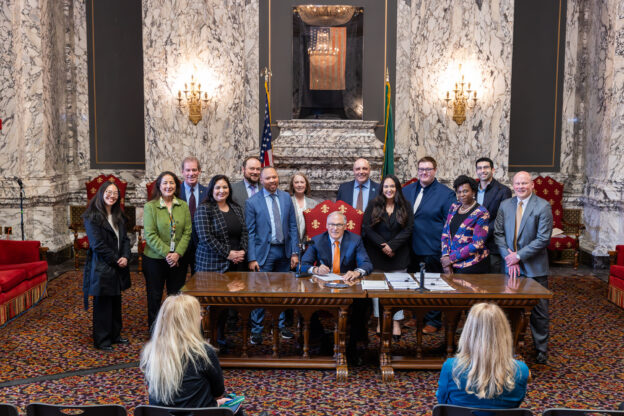
Today Gov. Jay Inslee signed a measure sponsored by Sen. Nikki Torres that is aimed at making Washington safer and supporting access to criminal justice. The new law joins three additional Torres-sponsored measures signed by Inslee since the 2024 session ended earlier this month.

“I am pleased to see these important bills receive such broad bipartisan support and be signed into law,” said Torres, R-Pasco and a member of the Senate Law and Justice Committee. “Our state has a public-safety crisis, and reducing the lawlessness in our communities must be one of the Legislature’s top priorities.

“My measure to increase training for public defenders and prosecutors will go a long way toward creating a more capable and fully-staffed court system.”

Senate Bill 5780 encourages participation in public-defense and prosecution professions, to help address shortages that are hindering the administration of justice. The new law created by the Torres bill, which passed with unanimous support in both the Senate and the House, requires the Washington State Office of Public Defense (OPD) to administer a law-student rural public defense program. It will place law students as legal interns or recent law-school graduates with experienced public defense attorneys located in underserved areas and rural areas of the state. The measure also requires OPD to expand the capacity of its Criminal Defense Training Academy program to train new public defenders.

The legislation creates a similar law student rural prosecution program that will be administered by the Criminal Justice Training Commission or contracted by them to the Washington Association of Prosecuting Attorneys (WAPA), which would aid in the training and placement of future prosecutors in underserved communities.

“When we think of workforce shortages, we don’t often think of our public defenders and prosecutors, but the public court system is on the verge of collapse,” said Torres. “If we don’t start the process of addressing this crisis, we are at risk of seeing a complete failure of our ability to prosecute criminals and get justice for victims of crime.

“This law is a great start, but we will need to continue our efforts to encourage participation in these fields and provide needed resources if we hope to fully get a handle on this problem.”

SB 5780 is the latest of four Torres bills to make it through the 2024 session, including legislation to better equip substitute teachers and other temporary school employees with vital, potentially life-saving information about school-safety policies and procedures.

The law created by Senate Bill 5647 requires school districts to account for temporary staff in their emergency planning, including establishing a plan of action to relay information, regarding school-safety policies and procedures and the three basic functional drill responses. Torres’ legislation also directs the Office of the Superintendent of Public Instruction to ensure model policies and procedures and best practices account for temporary employees.

“The amount of information received by substitute teachers and other temporary staff about school-safety procedures varies among school districts, but that information is critical in an emergency,” explained Torres.  “This legislation will help increase knowledge of critical safety information, assist in emergency preparedness and bring consistency across our state’s 295 school districts.”

Senate Bill 5925 increases the number of allowable per diem days for fire commissioners in larger fire protection districts from 90 days to up to 144 days.

“Our fire commissioners are often forced to attend board meetings, critical planning sessions and organizational meetings during fire season, and this is especially difficult in larger, rural communities,” said Torres. “Unfortunately, under the current system, this often results in commissioners having to essentially work for free, after they have exhausted the 90 available per diem payments. We heard testimony that in central Pierce Country, some district commissioners exhaust their per diem in the first six months of the year.

“This new law will increase that number of reimbursable days to 144, creating a more equitable system. It will only apply to the state’s 18 largest fire districts and it will have no impact on the state budget, since it would utilize the districts’ own funds.”

Under the law created by SB 5924, a commissioner of a district that has an operating budget of $10 million or more may receive up to 144 per diem payments for compensation for time spent at official board meetings or performing duties on behalf of the fire district. The per diem rate is specified by the Office of Financial Management and adjusted for inflation. The bill passed the Senate unanimously and cleared the House 93-1.

Senate Bill 5885, which passed both chambers of the Legislature unanimously, is Torres’ government streamlining bill, aimed at improving the administrative process for whenever a territory is annexed to a city, town or code city.

“It’s not the 1990s,” said Torres. “There’s no reason for the state to require numerous paper copies of filings, when a single copy can be filed online, and easily accessed by OFM or any other entity that requires it. This is one of the good little measures that are needed from time to time to modernize our government and make it work more efficiently.”

All four of the Torres-sponsored measures are set to go into effect on June 6, 2024.

Torres’ criminal-justice bills unanimously approved by state Senate

Today the Senate approved two measures sponsored by Sen. Nikki Torres that are aimed at making Washington safer and supporting access to criminal justice.

Senate Bill 5160 would further define the crime of organized retail theft, a step the central Washington lawmaker says is crucial to protecting retailers and consumers, as well as black, Indigenous and people of color (BIPOC) communities, which are disproportionally affected by the growing epidemic of retail theft.

Senate Bill 5780 would encourage participation in public-defense and prosecution professions, to help address shortages that are hindering the administration of justice.

“I am pleased to see these two important bills receive such broad bipartisan support,” said Torres, R-Pasco and a member of the Senate Law and Justice Committee. “Our state has a public-safety crisis, and reducing the lawlessness in our communities must be one of the Legislature’s top priorities this session.

“These measures both aim at restoring law and order to our state – together they would hit criminals with tougher sentences while supporting a more capable and fully-staffed court system to prosecute offenders.”

Under SB 5160, which passed the Senate for the second year in a row – this time by a vote of 49-0 – a person could be charged with second-degree organized retail theft for stealing property with a cumulative value of at least $750 with two or more accomplices who enter the store within five minutes of one another.

“Last year, the retailer Target pointed to theft and organized retail crime as the main reason for closing two of its Seattle stores, saying the move was done for the safety of its workers and customers,” Torres explained. “But this is a problem that harms retailers from Seattle to Yakima to Pasco and everywhere in between – in storefronts big and small.

“Organized retail theft is a multi-million-dollar problem and a huge loss for business owners. It drives up the cost of goods, leaving businesses with only two options: raise prices or close locations altogether. This creates a devastating one-two punch that hits low-income and BIPOC communities hardest, creating a serious issue of equity and access to goods for those communities.”

Senate Bill 5780, which passed the Senate unanimously, would require the Washington State Office of Public Defense (OPD) to administer a law-student rural public defense program. It would place law students as legal interns or recent law-school graduates with experienced public defense attorneys located in underserved areas and rural areas of the state. If fully funded, the measure would also require OPD to expand the capacity of its Criminal Defense Training Academy program to train new public defenders. The bill would also create a similar law student rural prosecution program that would be administered by the Criminal Justice Training Commission or contracted by them to the Washington Association of Prosecuting Attorneys (WAPA), which would aid in the training and placement of future prosecutors in underserved communities.

“When we think of workforce shortages, we don’t often think of our public defenders and prosecutors, but the public court system is on the verge of collapse,” said Torres. “If we don’t start the process of addressing this crisis, we are at risk of seeing a complete failure of our ability to prosecute criminals and get justice for victims of crime.”

Both of Torres’ measures now move to the House of Representatives for its consideration.

Torres bill to expand farm-internship program signed into law

Thanks to a measure sponsored by Sen. Nikki Torres, more young people will soon be on their way to becoming the next generation of Washington farmers. Senate Bill 5156, which was signed by the governor on Thursday in a ceremony at the Capitol, expands the state’s successful farm-internship program statewide and also makes the program permanent.

“The big tech companies in Seattle might take a lot of the limelight, but it is our ranchers and growers who form the core of our economy, and feed people here and around the globe,” said Torres, R-Pasco, who represents the largely rural and agricultural 15th Legislative District, which includes parts of five central Washington counties.

“Many in our agricultural community are struggling to maintain their businesses, and face a host of challenges from foreign price manipulation and a lack of access to markets to extreme weather patterns and limitations on financial capital.

“This new law expands the successful farm-intern program across the state and makes it permanent, helping those would-be farmers who currently want to participate, but who have been ineligible because of the county in which they happen to live. These eager applicants will now have the opportunity to learn not only how to farm, but also how to successfully run a farm in today’s challenging environment.”

Substitute Senate Bill 5156 requires the state Department of Labor and Industries to certify that the participating farms would allow interns to participate in career and technical education or other educational content with courses in agriculture. The bill also defines a small farm as one with annual sales of less than $265,000, rather than less than $250,000, as it is currently. In order to be eligible to participate in the farm intern program, a farm must have at least one intern who has, or whose parent or grandparent has, direct experience working as a migrant farmworker.

SB 5156 contains an emergency clause, meaning the law created by the bill took effect immediately upon the governor signing the legislation.

Torres crop-protection bill signed by governor

Today Gov. Jay Inslee signed a bill sponsored by first-year Sen. Nikki Torres to help with the administration of rules related to crop-protection products. The measure, which passed both the House and Senate with unanimous support, is Torres’ first bill to make it through the legislative process to the governor’s desk and receive his signature.

“I’m pleased that my first piece of legislation to become law is about serving our agricultural community,” said Torres, R-Pasco. “Washington has a robust agricultural portfolio that includes more than 300 different commodities, and pest management is an important issue that impacts every grower in the state. Changing the commission’s name not only better reflects its actual work, but the new law also adds a nonvoting member who will represent our region and help the federal government understand the specific pest-control issues affecting the Pacific Northwest.”

Senate Bill 5143 cleared the Senate with a vote of 49-0 on March 2. It passed the House 96-0 on March 24. The new law changes the name and membership of the Commission on Pesticide Registration and adds a representative from Region 10 (the Pacific Northwest) of the Environmental Protection Agency (EPA), headquartered in Seattle, as a non-voting member. EPA Region 10 serves Alaska, Idaho, Oregon, Washington, and 271 Tribal Nations.

Another Torres crop-protection measure,  Senate Bill 5330, is one step from a vote of the House. That bill would make changes to the Washington Pesticide Application Act. Requested by the Washington Department of Agriculture, it would allow the WSDA director to suspend or revoke a license or certification based on decisions made by another jurisdiction under certain conditions.

It also would remove the requirement that applicants be at least 16 years old on the date the application is submitted and would add a requirement that WSDA adopt standards for pesticide applications made by noncertified individuals.

“This bill is critical to the safety and well-being of both the user and those living in the general vicinity of the widespread use of crop-protection products,” said Torres. “It is the first step in implementing Washington’s EPA-approved plan to ensure that pesticides are used safely, with minimal negative impacts to health and the environment.

“I hope my colleagues in the House will show that bill the same love they showed Senate Bill 5143, and hopefully we also can get that important legislation to the governor without delay.”

The law created by SB 5143 will go into effect on July 23, 2023. The House has until 5 p.m. on April 12 to pass SB 5330. That is the last day for the House to consider a Senate policy bill (and vice versa) this legislative session.

Torres ‘stunned’ by House failure to advance bill regarding missing and murdered Indigenous people bill

Today state Sen. Nikki Torres, R-Pasco, released the following comments in response to reports that House Democrats are preparing to kill her bill to implement recommendations from the state’s Missing and Murdered Indigenous Women and People (MMIWP) task force.

Torres’ bill is part of the Legislature’s efforts to identify the root causes of the shockingly large and disproportionate number of Native Americans who have gone missing or been murdered in Washington.

“I am stunned and dismayed that a bill to help get at the root cause of crimes of violence against Indigenous people, especially women and children, is on the chopping block this late in the session. The bill to extend the work of the Missing and Murdered Indigenous Women and People task force passed out of the Senate unanimously, and the measure would undoubtedly have similar levels of support in the House of Representatives if it were allowed to come to the floor for a vote of the full chamber.

“Throughout the legislative process, there has been no testimony in opposition to the bill, while there has been a large outcry of support for it. On Valentine’s Day, I stood with lawmakers from both chambers and both parties, voicing support for domestic-violence legislation, including this bill.

“The Yarrow Project, the Washington Association of Sheriffs and Police Chiefs, and the Confederated Tribes and Bands of the Yakama Nation all testified in favor of the bill.

“Despite this broad, bipartisan, and bicameral support, the bill has been stuck in the House Community Safety, Justice, and Reentry Committee since it received a hearing on March 13. Now there are indications that the committee plans to allow the bill to die by denying it a vote prior to tomorrow’s deadline for House policy committees to act on Senate legislation. I am extremely disappointed by this obstruction.

“We owe it to the families of these victims to not only identify solutions to this ongoing problem, but to implement those solutions as quickly as possible. That’s what this bill is about.

“All session long, Democrats in both the House and Senate voiced support for Indigenous people and for this bill. Now, at the last minute, there are indications that they are willing to leave the fate of the task force’s recommendations – and in all likelihood, the very existence of the task force itself – up to budget negotiators. Yes, we may be able to get a budget proviso through to continue the funding for the task force, but why should these victims’ families have to sweat out the budget process and hope for the best? Why are the Indigenous people and their needs reportedly once again being put on the back burner?

“They deserve a clean, straight up-or-down vote. They deserve to know who stands with their community, supports justice for their families, and is truly committed to preventing more of their sisters from becoming forgotten victims, while Olympia turns a blind eye.

“Fortunately, there is still time for the majority Democrats in the House to do the right thing, and let this bill move forward. I will keep working with my colleagues in good faith to try to make that happen.”

Senate Bill 5477 would implement recommendations identified in the task force’s August 2022 interim report.

Under the Torres bill, the MMIWP task force would be extended through June 30, 2025. It would be required to develop additional recommendations and best practices for collaboration and coordination between law-enforcement agencies and social and health services, and to improve communication and transparency with family members in cases involving missing and murdered indigenous women and people.

The bill would also require law-enforcement agencies to enter a missing-person case into the National Missing and Unidentified Persons System if a missing person has not been found within 30 days of the report or if an investigating agency suspects criminal activity to be the cause of the missing person’s disappearance.

The deadline for House policy committees to approve Senate bills is tomorrow, March 29.

Torres bill on missing and murdered Indigenous people passes Senate

Today the state Senate passed Sen. Nikki Torres’ measure implementing the recommendations of the Washington state Missing and Murdered Indigenous Women and People task force. The bill is part of the Legislature’s efforts to identify the root causes of the shockingly large number of Native Americans who have turned up missing or murdered in Washington.

“Crimes against Indigenous people, especially women and children, have continued to plague our state and our nation,” said Torres, R-Pasco. “Despite making up only 2% percent of our population, 136 indigenous people in our state have been identified as missing by the Washington State Patrol. That’s as of January. This is unacceptable.

“We owe it to these families to not only identify solutions to this ongoing problem, but to implement those solutions as quickly as possible. That’s what this bill is about.”

According to a 2021 report from the National Congress of American Indians, Native American women face murder rates almost three times those of non-Native women, with an alarming 80% or more having experienced violence.

Senate Bill 5477, which passed the Senate with unanimous support, would implement recommendations identified in the task force’s August 2022 interim report. Under the Torres bill, the MMIWP task force would be extended through June 30, 2025. It would be required to develop additional recommendations and best practices for collaboration and coordination between law-enforcement agencies and social and health services, and to improve communication and transparency with family members in cases involving missing and murdered indigenous women and people.

The bill would also require law-enforcement agencies to enter a missing-person case into the National Missing and Unidentified Persons System if a missing person has not been found within 30 days of the report or if an investigating agency suspects criminal activity to be the cause of the missing person’s disappearance.

SB 5477 now goes to the House of Representatives for its consideration.


Senate unanimously approves Torres bill improving irrigation-district elections

Today the Senate voted 47-0 to approved state Sen. Nikki Torres’s bill to modernize irrigation-district elections by permitting the use of mail-in ballots in place of exclusively polling places and absentee ballots.

Senate Bill 5709 deals with the election of directors for irrigation districts, which construct, operate and maintain the infrastructure that supplies water for Washington agriculture. There are about 100 irrigation districts throughout the state.

“This is a commonsense bill that has been well-worked in previous sessions,” said Torres, R-Pasco. “Irrigation districts are the oldest form of special purpose districts in Washington. The election procedures for irrigation districts reflect this and are antiquated, with even the wording of the current law being in desperate need of an update.

“Senate Bill 5709 removes some questionable terminology from the law, makes some changes to how someone becomes a candidate for the district board, and allows for the safe and secure use of mail-in ballots.”

The bill now moves to the House of Representatives for that chamber’s consideration.

Deadlines and debate

On Friday, the 2023 legislative session hit the first of several deadlines intended to keep the Legislature on track and whittle down the total number of bills to only those measures with broad enough support among members.

The first of these deadlines is known as “policy cutoff.” It’s the last day for bills to be passed out of their respective policy committees. Bills that are before a fiscal committee, such as Ways and Means or Transportation, have slightly more time. The fiscal cut off deadline is this Friday, Feb. 24.

Several of my bills survived the first cutoff. You can read more about those below.

Click here to read the full Report from Olympia.